

Vizian Lex 1.0 – A 3 Day Hands-on Training Workshop on Intellectual Property Law & Practice
The GITAM School of Law – Mediation Centre (GSL-MC) organised VizianLex 1.0, a three-day hands-on training workshop focused on the practical dimensions of Intellectual Property Law and Practice.
The workshop covered Patent, Trademark, and Copyright Law, with each day dedicated to a distinct area of intellectual property. Through expert-led sessions and practical learning, participants explored the protection, prosecution, enforcement, and commercial dimensions of intellectual property rights.
Day 1 — Patent Law
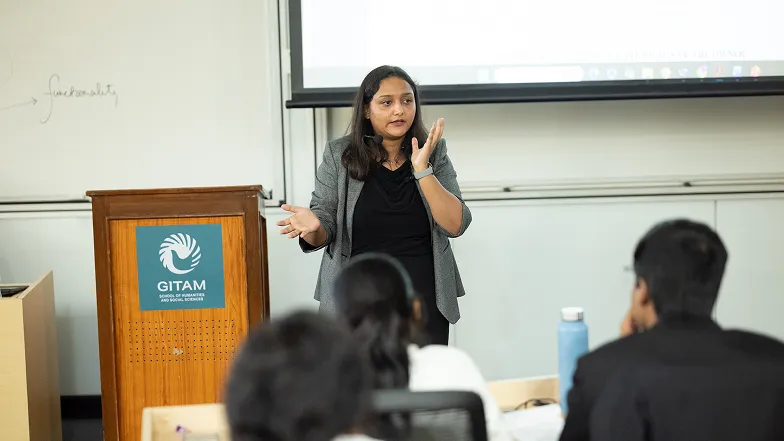
The first day of VizianLex 1.0 focused on Patent Law, introducing participants to the fundamentals of patent protection and the practical considerations involved in securing and enforcing patent rights. The session was presided over by Dr. Padmavati Manchikant, IIT Kharagpur.
Understanding Patent Protection
The session explored patents as legal rights that protect qualifying inventions while encouraging innovation disclosure of technological knowledge and commercial exploitation.
Participants examined different forms of patentable subject matter, including products, processes, technological systems, and certain compositions, along with the legal requirements that determine whether an invention qualifies for protection.
Essentials of Patentability
The discussion covered the three core requirements for patent protection:
- Novelty — the invention must be new and not previously disclosed.
- Inventive Step — the invention must not be obvious to a person skilled in the relevant field.
- Industrial Applicability — the invention must be capable of being made or used in an industry.
The session also highlighted the importance of prior-art searches in assessing novelty and inventive step.
Specification, Claims & Prosecution
Participants explored the distinction between a patent specification, which describes the invention in detail, and patent claims, which define the legal scope of protection sought.
The session further covered the patent prosecution process, including examination, pre-grant and post-grant opposition, and grant or rejection of applications.
Patent Litigation & Policy
The day concluded with an introduction to patent disputes involving infringement, revocation, declarations of non-infringement, and counter-claims.
Broader policy considerations, including technological development, public interest, international considerations, and emerging technologies, were also discussed.
Key Takeaway
The session demonstrated that effective patent protection extends beyond identifying an invention. It requires careful consideration of patentability, prior art, drafting, prosecution, and enforcement, providing participants with a practical foundation for understanding patent practice.
Day 2 — Trademark Law
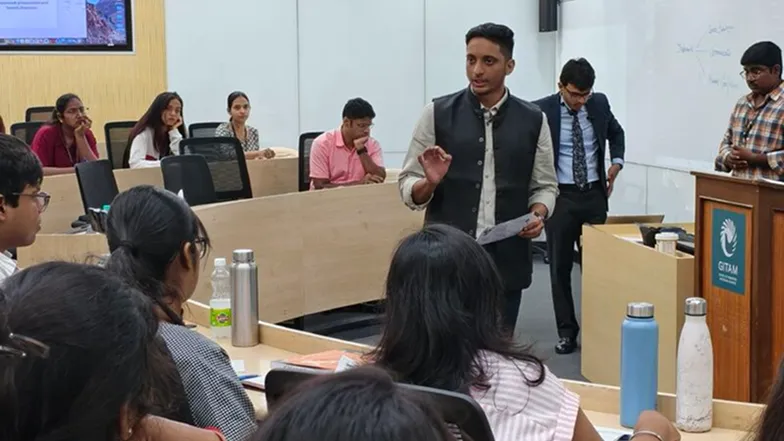
The second day of VizianLex 1.0 shifted the focus from inventions to brand identity and market recognition, exploring the role of trademarks in distinguishing goods and services and protecting commercial identity. The session was presided over by Mr. Navdeep Suhag , A Senior Associate at The Acme Company and a practising advocate based in New Delhi.
Understanding Trademarks
The session introduced trademarks as distinctive marks capable of identifying and distinguishing the goods or services of one business from another. Participants explored their role in:
- Identifying the source of goods and services
- Building brand identity and reputation
- Preventing consumer confusion
- Creating and protecting commercial value
The discussion also examined different forms of trademarks, including names, shapes, colours, and other distinctive features capable of identifying a commercial source.
Trademark Search & Classification
A key focus was the importance of conducting a comprehensive trademark search before adopting or applying for a mark. Participants explored searches involving existing rights, similarity between marks, relevant goods and services, and prior market use.
Practical sources such as official trademark databases, social media, online marketplaces, and general web searches were also discussed.
The session further introduced the classification of goods and services, highlighting its importance in defining the scope of trademark protection and assessing potentially conflicting marks.
Trademark Prosecution & Opposition
Participants were introduced to the major stages of trademark registration:
Application → Examination → Objections → Publication → Registration
The session also covered trademark opposition proceedings, including the filing of opposition, response by the applicant, evidence, hearings, and the final decision of the competent authority.
Trademark Disputes & Consumer Confusion
The discussion examined common issues arising in trademark disputes, including similarity between marks, consumer confusion, prior use, and prior registration.
A case discussion involving Mapple and Apple provided a practical context for understanding how similarity, prior rights, and consumer perception can influence trademark disputes.
Key Takeaway
The session demonstrated that effective trademark protection extends beyond registering a name or logo. It requires careful searching, appropriate classification, strategic prosecution, and an understanding of how competing marks may be perceived by consumers in the marketplace.
Day 3 — Copyright Law
The final day of focused on Copyright Law, exploring the protection of original creative expression and the rights associated with copyrighted works. The session was presided over by Mrs. Garima Joshi, Counsel, Rajeshwari & Co.
Understanding Copyright
The session introduced copyright as an intellectual property right protecting original creative expression. Participants explored the rights of copyright owners to control, license, and commercially exploit their works, as well as to prevent unauthorised use where legally protected.
Idea–Expression Distinction
A key concept discussed was the fundamental distinction between ideas and their expression. While copyright does not generally protect an idea or concept itself, the original expression of that idea may qualify for protection.
This principle was examined as an important tool for understanding both the scope and limitations of copyright protection.
Rights & Licensing
Participants explored the bundle of rights associated with copyright, including:
- Reproduction
- Distribution and communication
- Licensing
- Commercial exploitation
The session also introduced the concepts of licensor and licensee, highlighting how licensing allows copyright owners to permit the lawful use of their works under agreed conditions.
Originality & Infringement
The discussion examined originality as a fundamental consideration for copyright protection, emphasising the creator's own intellectual and creative contribution.
Participants were also introduced to key concepts including author, copyright owner, licence, and infringement, along with the significance of the Copyright Amendment Act, 2012, particularly in relation to the rights and protection of authors and lyricists.
Key Takeaway
The final day demonstrated that copyright protection centres on original creative expression, ownership, licensing, and responsible use. Understanding these principles is essential for applying copyright law to creative works and commercial situations.
Across VizianLex 1.0
The three-day workshop provided a structured exploration of three core areas of Intellectual Property Law:
- Patent Law focused on inventions, covering patentability, prior art, claims, prosecution, and enforcement.
- Trademark Law focused on brand identity, covering searches, classification, registration, opposition, and consumer confusion.
- Copyright Law focused on creative expression, covering originality, ownership, licensing, and infringement.
Together, the sessions demonstrated how different forms of intellectual property protect different subject matter and operate through distinct legal mechanisms.
Learning Outcomes
Through the workshop, participants developed an understanding of:
- The purpose and significance of Intellectual Property Rights
- Patentability, prior art, specifications, and claims
- Patent prosecution, opposition, and enforcement
- Trademark searches, classification, registration, and opposition
- Similarity, prior rights, and consumer confusion
- The distinction between ideas and copyrightable expression
- Copyright ownership, licensing, originality, and infringement
- The practical and commercial dimensions of IP protection
Conclusion
The Workshop under the project of Vizian Lex 1.0 provided the participants with a practical foundation in Intellectual Property Law by connecting legal principles with real-world considerations involving protection, prosecution, opposition, licensing, infringement and enforcement.
The three-day journey from inventions to brand identity and creative expression highlighted the importance of understanding not only the law governing intellectual property, but also how rights are identified, protected, managed and enforced in practice.
Gallery